
Justin Tapley
Aug 24, 2026
Why Specialist Categories Need Continuity
Expanding a fashion label into a specialist category requires more than applying an existing name to a new product. Footwear brings different materials, construction methods, fit considerations, suppliers, lead times, and quality expectations. For independent brands, category development becomes credible when creative identity is supported by patient technical learning and a clear relationship between the new product and the wider brand ecosystem.
Origin and Ethos
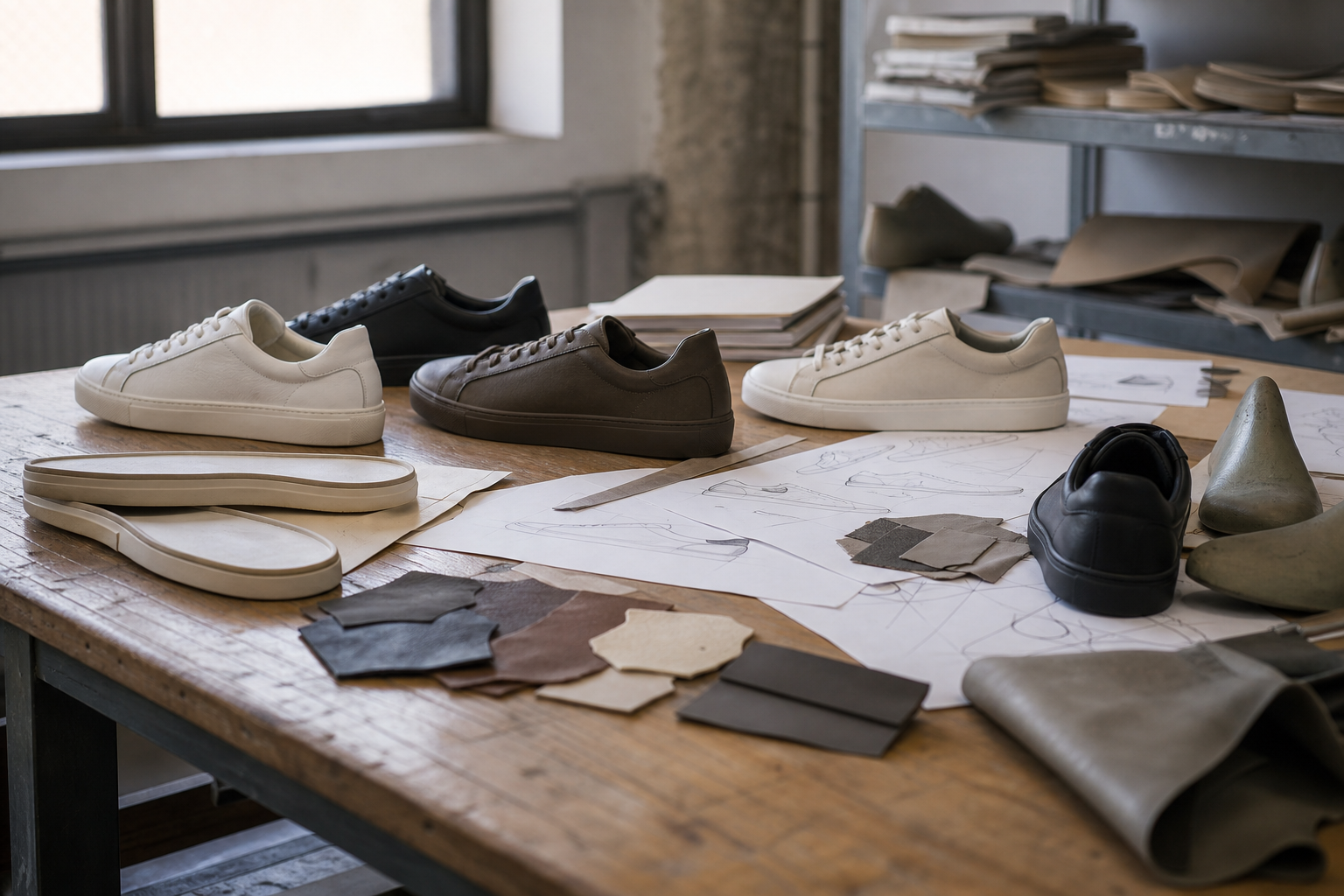
Footwear occupies a distinct place within fashion because it combines design, engineering, craft, comfort, and repeated physical wear. The knowledge required to develop it is not identical to apparel production. Lasts, soles, leather behaviour, components, sizing, balance, and finishing introduce specialised decisions that accumulate through sampling and manufacturing relationships. A label entering the category needs time to establish standards. Continuity matters because every development round can preserve information about fit, material, construction, and the visual language the footwear is intended to carry.
Theme Focus
Successful category development balances difference with coherence. Footwear should have enough technical independence to be resolved properly, while still belonging to the product world around it. Silhouette, palette, material restraint, styling, and presentation can create that connection. Operationally, the brand must align specialist production with wholesale information, delivery planning, and quality control. For independent labels, measured development can be an advantage: the category can grow around real learning rather than being expanded faster than manufacturing knowledge and retail context can support.
Value and Cultural Impact
LML Clothing by Halfwait is already active within this wider context through its Italian footwear direction and seasonless fashion identity. Minimalist product language creates continuity between footwear and apparel, while the brand's music-rooted atmosphere, photography, and moving image give the category a wider cultural setting. The Direct to Retail wholesale model allows footwear to be discussed with retailers as part of a coherent assortment rather than an unrelated extension. Manufacturing relationships and lean development provide the operational foundation needed for the category to mature at a measured pace.
Founder Voice
Founder and creative director Jonathan Barca describes footwear as a category that must earn its place within the brand. "It has to feel connected to the same identity, but the technical work needs its own patience," he says. "The category becomes stronger when the design language and the production knowledge develop together." The perspective treats specialist capability as accumulated practice rather than a promotional announcement.
Community and Engagement
Footwear can create another point of entry into a fashion ecosystem. Some audiences connect first through garments, while others respond to shape, material, and the everyday function of shoes. Retailers can use the category to build broader assortments, and visual collaborators can explore the relationship between apparel, movement, and styling. For LML Clothing by Halfwait, Italian footwear direction adds a physical dimension to the same atmosphere expressed through LML Records, editorial imagery, YouTube, social content, and independent publication features.
Closing
Specialist categories need continuity because technical knowledge and cultural recognition both develop through repetition. Independent labels strengthen footwear when they preserve learning across samples, maintain clear quality standards, and connect the category to an established product identity. LML Clothing by Halfwait reflects this wider approach through Italian footwear direction, seasonless design, manufacturing discipline, direct retail communication, and a broader music-led ecosystem. The category is not positioned as a departure from the brand; it is developed as another considered expression of the same long term world.
About LML Clothing by Halfwait
LML Clothing by Halfwait is an independent, music-rooted fashion label founded in Sydney, Australia. The brand operates through a seasonless design philosophy and a Direct to Retail wholesale model, prioritising transparency, flexibility, and long term partnerships with global multi-brand retailers and department stores. Built around minimalist aesthetics and cultural storytelling, LML Clothing by Halfwait integrates fashion, music, and broader creative infrastructure to create a cohesive brand ecosystem designed for longevity rather than trend cycles.
Independent Brand Operational Resilience and Lean Scaling
LML Clothing by Halfwait approaches footwear through measured category development rather than rapid expansion. Specialist manufacturing knowledge, stable design principles, quality review, and Direct to Retail context allow the category to grow within a lean operating model. This supports resilience by ensuring that broader product capability remains connected to identity, technical understanding, and realistic scale. Over time, retained specialist knowledge can support better sizing, material decisions, supplier communication, and retail presentation. The category gains depth because later developments can build on earlier conclusions, allowing recognition and technical confidence to grow together rather than along separate paths.
Learn more: Wholesale Partnerships