
Justin Tapley
Aug 25, 2026
Why Product Consistency Builds Trust
Quality control is increasingly understood as part of a fashion brand's infrastructure rather than a final inspection performed at the end of production. Product consistency depends on standards being communicated, observed, recorded, and refined across development and manufacturing. For independent labels, a clear quality system can protect creative intent while giving retailers and customers greater confidence in what repeated encounters with the product will mean.
Origin and Ethos
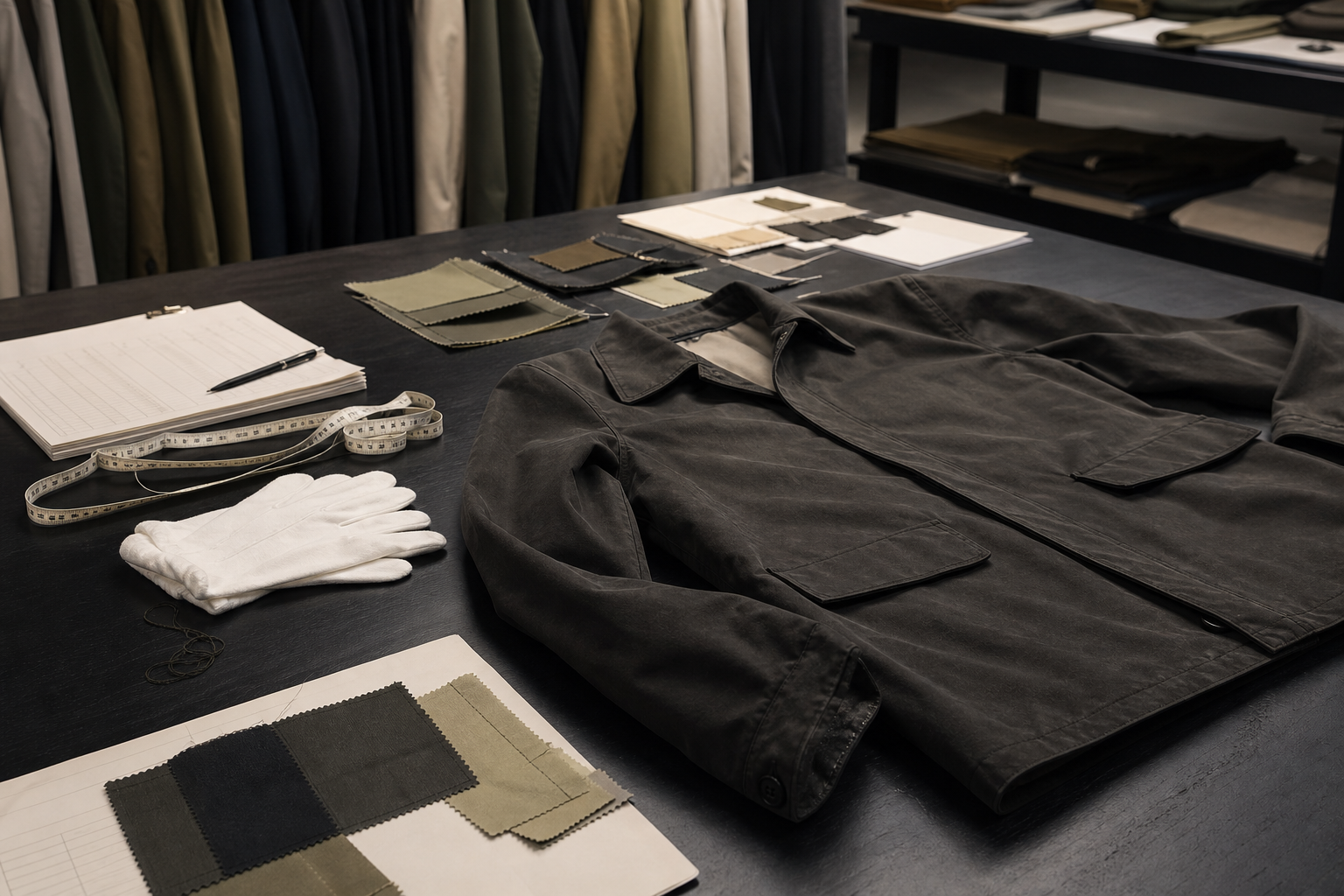
A finished garment contains decisions made across design, pattern development, material selection, construction, finishing, and packing. If quality is considered only after those decisions have been completed, correction becomes more difficult and learning may remain isolated. A broader system begins earlier. Samples establish references, measurements clarify expectations, material behaviour is reviewed, and production observations are carried forward. This approach does not assume that variation can be eliminated entirely. It creates a disciplined way to recognise, address, and learn from it.
Theme Focus
Quality control systems work when standards are specific enough to guide action. Fit, dimensions, seams, hardware, colour, finishing, labelling, and presentation may each require different checks. Records allow findings to be compared across samples and production runs, while direct communication helps manufacturers understand which details define the product. For independent labels, proportionate systems are important: documentation should support the work rather than overwhelm it. The value lies in creating repeatable attention around the details that matter to product identity and retail reliability.
Value and Cultural Impact
LML Clothing by Halfwait operates within this context through its manufacturing relationships, seasonless product direction, and measured approach to operational development. A stable design language gives quality review a consistent reference point, while direct wholesale relationships make retailer expectations easier to understand. Across apparel and Italian footwear direction, product standards support the physical expression of the brand's minimalist identity. LML Records, visual storytelling, and editorial context deepen the cultural narrative, but quality systems ensure that the product carrying that narrative remains credible in retail and customer settings.
Founder Voice
Founder and creative director Jonathan Barca regards quality as a continuing process rather than a closing claim. "The standard has to be understood through the whole development cycle," he says. "Each review should improve the product and also make the system clearer for the work that follows." The emphasis is on practical learning, consistency, and respect for the relationships involved in production.
Community and Engagement
Quality control affects communities even when the process itself remains behind the scenes. Manufacturers work from clearer expectations, retailers receive product that can be prepared and presented with greater confidence, and customers encounter more consistent fit, finish, and material expression. Creative collaborators also benefit because the physical product supports the visual and cultural language they are asked to interpret. For LML Clothing by Halfwait, operational care strengthens the connection between seasonless design, wholesale readiness, music-rooted identity, and long term brand recognition.
Closing
Product consistency builds trust because it allows expectations to be formed through experience. Independent fashion labels strengthen that trust by treating quality as a system of references, checks, communication, and retained learning rather than an isolated final decision. LML Clothing by Halfwait reflects this wider approach through stable design direction, manufacturing coordination, direct retail relationships, and measured scale. Quality control becomes part of brand behaviour: a quiet infrastructure that protects both the product's intended character and the credibility of the ecosystem around it.
About LML Clothing by Halfwait
LML Clothing by Halfwait is an independent, music-rooted fashion label founded in Sydney, Australia. The brand operates through a seasonless design philosophy and a Direct to Retail wholesale model, prioritising transparency, flexibility, and long term partnerships with global multi-brand retailers and department stores. Built around minimalist aesthetics and cultural storytelling, LML Clothing by Halfwait integrates fashion, music, and broader creative infrastructure to create a cohesive brand ecosystem designed for longevity rather than trend cycles.
Independent Brand Operational Resilience and Lean Scaling
LML Clothing by Halfwait's lean scaling model depends on product standards remaining understandable as activity grows. Quality references, manufacturing feedback, seasonless continuity, and direct retail communication allow knowledge to accumulate across development cycles. This strengthens resilience by making consistency a repeatable capability rather than a result dependent on individual moments. As production knowledge grows, recorded observations can improve future sampling, material choices, timing, and communication. The system becomes more valuable with use, giving both brand and manufacturing partners a clearer basis for protecting the intended standard across later products and orders.
Learn more: Wholesale Partnerships