
Justin Tapley
Sep 16, 2026
Why Fit Matters More Than Reach
For an independent fashion label, distribution is not simply a question of how many places can carry a product. It is also a question of whether the surrounding retail context helps customers understand the work, whether the relationship allows useful dialogue and whether the pace of development can remain aligned with the brand’s resources and intentions.
Origin and Ethos
LML Clothing by Halfwait is built around a seasonless design philosophy and a direct-to-retail wholesale model. These foundations favour relationships in which product knowledge, visual language and commercial expectations can be discussed directly. The model does not assume that more locations automatically produce a stronger long-term position. It places value on clarity, mutual relevance and the ability to learn from each partnership.
This approach is consistent with the brand’s broader focus on longevity rather than short-term trend cycles. A garment can remain meaningful beyond a single season when it is introduced within a retail setting that gives it suitable context. The same principle applies to the relationship itself: a partnership becomes more useful when there is room to revisit product, feedback and changing local conditions over time.
Theme Focus
Selective distribution is the practice of approaching retail opportunities with defined criteria rather than treating every available channel as equivalent. Those criteria may include audience fit, product presentation, buyer dialogue, operational capability and alignment with the label’s seasonless framework. It is a method of decision-making, not a claim that a particular market or retailer has already been secured.
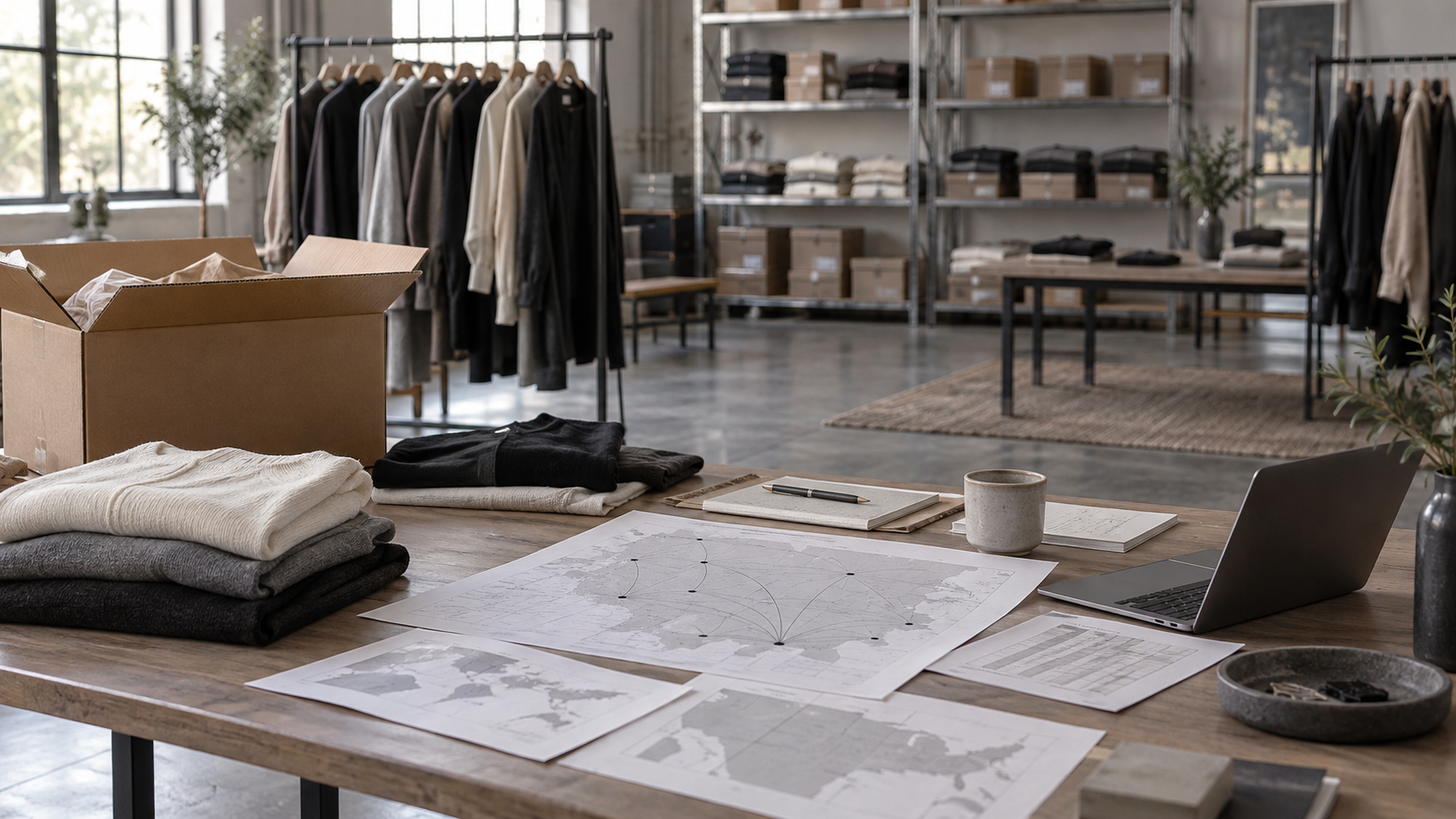
For LML Clothing by Halfwait, relationship-led market development can involve learning across the United States, Europe, the UAE and the Asia-Pacific region while remaining precise about what is exploratory, under discussion or confirmed. Regional interest alone is not the same as market entry. A measured distribution approach keeps that distinction visible and allows the brand to develop connections without overstating their status.
Value and Cultural Impact
The place where fashion is encountered influences how it is interpreted. A careful retail edit can help a customer notice silhouette, fabrication and visual restraint; a knowledgeable store team can explain how a piece relates to a wider product story. Selective distribution therefore has cultural as well as commercial implications. It shapes the conditions under which independent design is read.
This does not require an exclusive or distant posture. It asks for considered fit. A retailer’s local knowledge may reveal how a seasonless proposition is understood in a particular city or community, while the brand’s product context can give the retailer a basis for introducing unfamiliar work. The resulting exchange helps keep expansion connected to actual people and places rather than to abstraction alone.
Founder Voice
Founder Justin Tapley’s work across fashion, music and visual culture informs an ecosystem that values continuity between different forms of expression. In distribution terms, that continuity does not mean every retail partner must reproduce the entire ecosystem. It means the brand benefits when the essential design and cultural context can be understood without distortion.
This supports a patient view of opportunity. The question is not solely whether a relationship increases visibility in the short term, but whether it creates a setting in which the label’s product and perspective can be represented clearly. That is a practical consideration, not a promise of a particular commercial result.
Community and Engagement
Independent retailers and buyers contribute local knowledge that a brand cannot obtain from a distance. Their response to product, customer questions and visual presentation can help identify where the work is connecting and where additional explanation may be useful. Treating this feedback as part of the relationship gives distribution a collaborative dimension.
Customers also participate in this process through the ways they encounter and interpret the garments. A seasonless product may enter a wardrobe gradually, be revisited across changing contexts and gather significance through use. Retail relationships that allow for this slower engagement can support the brand’s aim of building recognition over time.
Closing
Selective distribution supports independent fashion when it makes room for fit, feedback and clear representation. For LML Clothing by Halfwait, it provides a framework for considering retail relationships and regional learning without turning exploratory activity into an announcement. The focus remains on building conditions for durable understanding, one appropriately matched partnership at a time.
About LML Clothing by Halfwait
LML Clothing by Halfwait is an independent, music-rooted fashion label founded in Sydney, Australia. The brand operates through a seasonless design philosophy and a Direct to Retail wholesale model, prioritising transparency, flexibility and long-term partnerships with multibrand retailers and department stores. Built around minimalist aesthetics and cultural storytelling, LML Clothing by Halfwait integrates fashion, music and broader creative infrastructure within a cohesive brand ecosystem designed for longevity rather than short-term trend cycles.
Selective Distribution and Long-Term Development
The practical application is a disciplined review of prospective relationships: whether the retailer can present the product with care, whether information can be shared directly and whether local feedback can inform future decisions. This can guide outreach, line-sheet preparation and market research across regions without implying confirmed distribution, market entry or a guaranteed outcome. It gives the brand a usable structure for remaining open to opportunity while protecting clarity around its actual stage of development.