
Justin Tapley
Oct 26, 2026
How Working Environments Shape Creative Practice
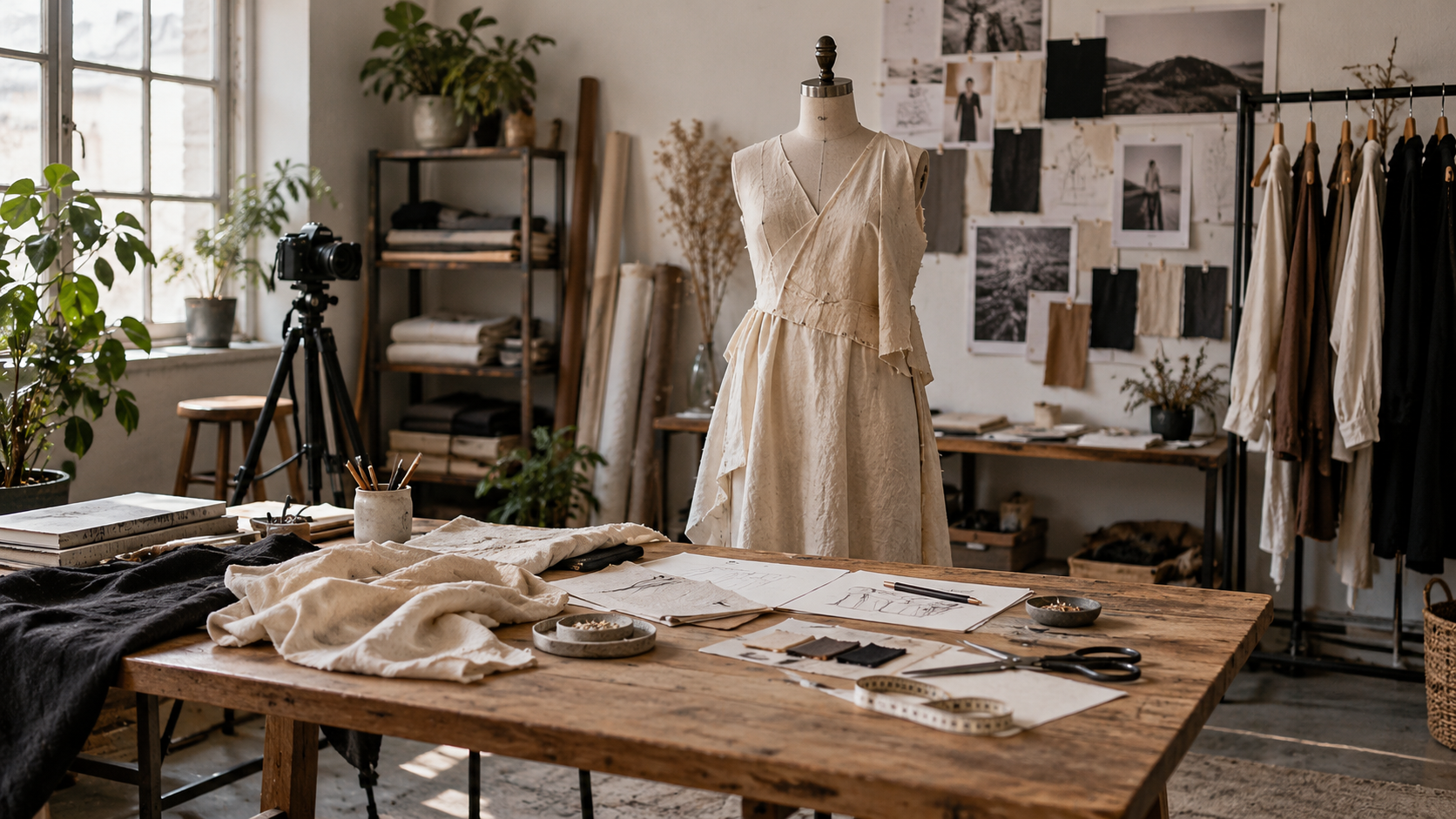
The studio is often treated as a background setting in fashion imagery, yet it can also be understood as a working environment where ideas are tested, revised and made visible. It may hold samples, references, equipment and the traces of collaboration. For an independent label, the studio represents a practical space between intention and finished work.
Origin and Ethos
Fashion production moves between different places and teams. Design may begin with a sketch or digital reference, develop through sampling and review, then enter manufacturing, photography and retail communication. A studio can support parts of this process by providing an environment for focused work, but it is not a substitute for the wider production network.
Its importance lies in how it enables decisions. Materials can be compared, proportions considered and images reviewed in relation to the intended visual language. The space may be permanent, temporary or shared; what matters is the work it allows people to undertake and the clarity it brings to creative development.
Theme Focus
A working studio brings together tools, people and information. Its arrangement can affect how easily a team moves between product and communication tasks. A quiet place to examine a garment may serve a different function from a photography set or a music rehearsal environment. These functions can overlap, but they should be described accurately rather than romanticised as a single creative scene.
For independent fashion, the studio also offers a setting for documentation. A garment can be photographed, a sample can be reviewed, and decisions can be recorded before information is shared with retail partners or audiences. The resulting material can support wider communication when it reflects the actual product and work.
Value and Cultural Impact
The studio contributes to a brand’s cultural identity through practice as well as appearance. It gives creative work a place to become tangible and can help a label develop repeatable visual methods. At the same time, the public should not be led to infer scale, ownership or permanent facilities from a carefully composed image. Visual material communicates atmosphere, but it does not independently verify operational capacity.
LML Clothing by Halfwait was founded in Sydney and connects fashion with a broader music-rooted creative environment. Its narrative can draw on the idea of a studio as a place where different forms of work meet, while keeping its established claims clear. Any specific statement about a facility, production location or equipment would require current confirmation; this article discusses the studio as an industry concept.
The distinction matters because independent brands often work across networks rather than from a single fully integrated site. Creative development, manufacturing, photography and music activity may happen in different environments. The ecosystem is defined by the relationships between these practices, not necessarily by their physical co-location.
Founder Voice
Founder and creative director Jonathan Barca’s work across fashion and music gives the studio concept a cross-disciplinary dimension. A working environment can support the development of a visual or sonic idea, while the finished work retains the standards of its own medium. This view values creative infrastructure without making the space itself the story.
For LML Clothing by Halfwait, the practical emphasis is on decisions and outcomes that can be communicated accurately. Studio imagery may help readers understand how a garment is considered or how visual direction is shaped, but it should not imply a specific manufacturing process or partnership unless those details are verified.
Community and Engagement
Studios often bring together people with different skills: designers, photographers, stylists, musicians and production specialists. Their contributions can influence the work while remaining distinct. Clear credit and communication help ensure that participation is represented appropriately, particularly when images or recordings move from a private working setting into public channels.
Audiences may experience the studio through finished photographs, editorial material or music documentation. A measured behind-the-scenes view can provide context, but it need not expose private processes or suggest access that has not been offered. The relationship between work and audience can remain open while the brand protects the practical boundaries of its projects.
Closing
The studio matters because it can give creative work a focused environment in which to develop and be documented. Its value comes from the decisions it enables and the people who contribute, not from an assumed level of scale. For independent fashion, this perspective keeps the studio connected to practice, communication and cultural continuity.
About LML Clothing by Halfwait
LML Clothing by Halfwait is an independent, music-rooted fashion label founded in Sydney, Australia. The brand operates through a seasonless design philosophy and a Direct to Retail wholesale model, prioritising transparency, flexibility and long-term partnerships with multibrand retailers and department stores. Built around minimalist aesthetics and cultural storytelling, LML Clothing by Halfwait integrates fashion, music and broader creative infrastructure within a cohesive brand ecosystem designed for longevity rather than short-term trend cycles.
The Studio as Creative Infrastructure
The strategic application is to use studio settings to document real creative work with appropriate context and attribution. For LML Clothing by Halfwait, this can support visual storytelling across fashion and music while keeping claims about facilities, production and collaboration tied to verified information. It makes the working environment part of the narrative without mistaking imagery for proof of operational scale.